By Rachel Moore | No Village Mom
I remember the night vividly. My son was eight months old, screaming at 2am, scratching his hair like a mad man and yanking on his ear like it owed him money. We were exhausted and doing what every village-less parent does at 2am — frantically Googling (and ChatGPting).
Is she teething? Is it an ear infection? Does she have a fever? Should I call the doctor? Should I go to the ER? Should I just cry?
I did all of those things. In that order.
What I wish I’d had was a simple, honest breakdown of what teething actually looks like versus what a real illness looks like. So here it is — everything I’ve learned the hard way, so you don’t have to.
The problem with teething
Here’s the thing nobody tells you: teething gets blamed for everything. Runny nose? Teething. Fussiness? Teething. Low-grade fever? Definitely teething. Existential dread? Probably teething.
The reality is more complicated. Teething does cause real symptoms — but it doesn’t cause everything we attribute to it. And confusing teething with an actual illness can mean missing something that needs real medical attention.
What teething actually looks like
True teething symptoms are pretty specific. Here’s what you’ll typically see:
The classic signs:
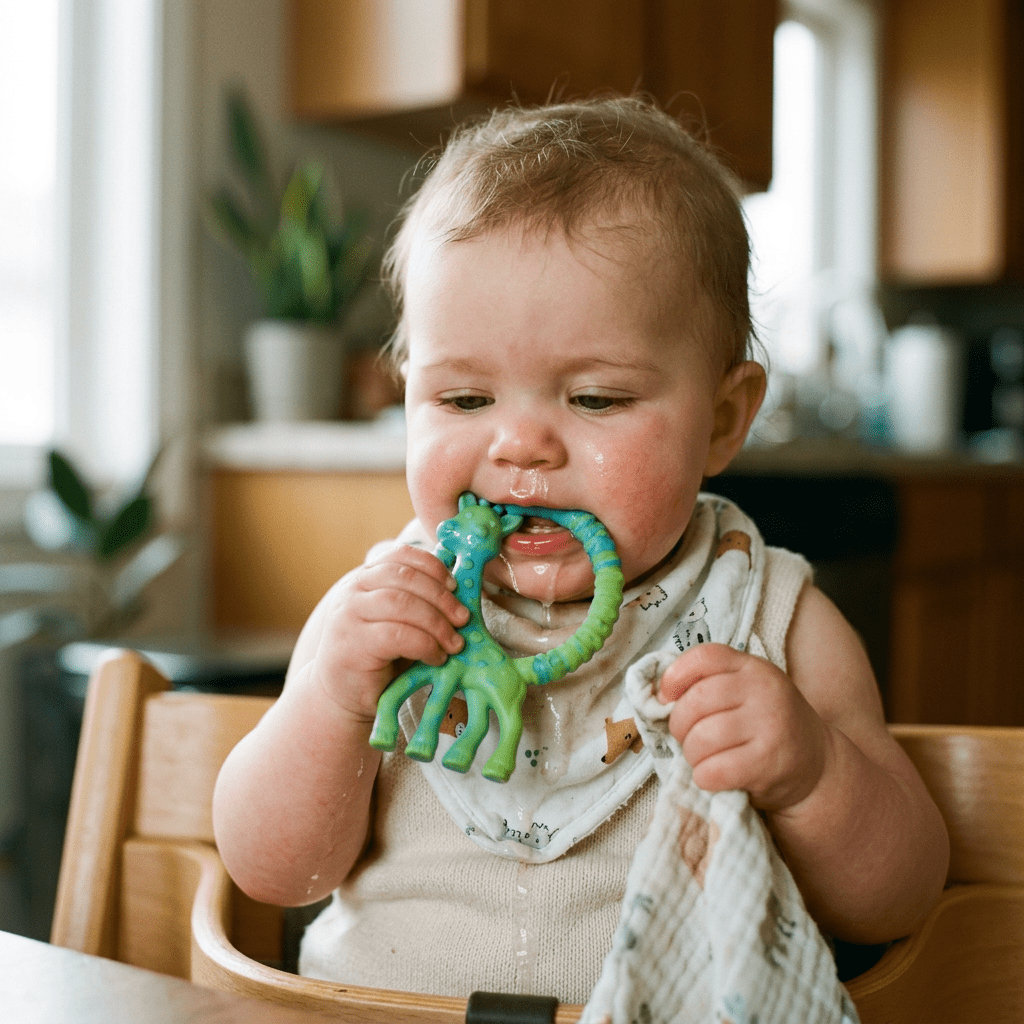
- Excessive drooling — like, soak-through-a-bib-in-ten-minutes level drooling
- Swollen, tender gum tissue where a tooth is coming in
- Chewing on everything — fingers, toys, your shoulder, the dog
- Fussiness and irritability, especially when eating
- Disrupted sleep (unfortunately)
- Mild rash around the mouth from all that drool
What teething does NOT cause:
- High fever (over 100.4°F / 38°C)
- Diarrhea
- Vomiting
- Significant congestion or runny nose
- Pulling at ears (this one surprised me — ear pulling is not a teething symptom)
I know. The ear pulling thing shocked me too. More on that in a second.
What illness actually looks like
When my son was yanking on heis ear at 2am, I assumed teething. It was an ear infection. She needed antibiotics. I felt terrible.
Here’s how to tell the difference:
Signs it might be more than teething:
Fever over 100.4°F — Teething can cause a very slight temperature increase, but anything over 100.4°F is considered a fever and warrants a call to your pediatrician. Don’t chalk a real fever up to teething.
Ear pulling with fever or crying — Ear pulling alone can just be a baby discovering they have ears. But ear pulling combined with fever, unusual fussiness, or trouble sleeping on one side? That’s an ear infection until proven otherwise.
Runny nose with thick, colored discharge — Clear drool and clear snot are normal with teething. Yellow or green discharge that lasts more than a few days is more likely a cold or infection.
Diarrhea — I’ve heard so many parents say “oh it’s just teething diarrhea.” There is no such thing as teething diarrhea. Loose stools can sometimes occur alongside teething because babies chew on things and swallow more saliva, but actual diarrhea — frequent, watery stools — is a sign of illness.
Vomiting — Not a teething symptom. Ever. Call your doctor.
Rash on the body — A drool rash around the mouth is common with teething. A rash anywhere else on the body is a reason to call your pediatrician.
The 2am checklist I wish I’d had
When you’re exhausted and your baby is screaming and you can’t think straight, here’s what to actually check:
- Take the temperature first — If it’s over 100.4°F, call your doctor. Don’t pass go, don’t spend an hour Googling.
- Look at the gums — Can you see or feel a tooth coming in? Is there visible swelling in one spot? If yes, teething is likely involved.
- Check the drool situation — Is your baby drooling more than usual? Teething babies drool a lot.
- How long has this been going on? — Teething fussiness comes and goes. An illness tends to be more consistent and may get worse over time.
- Is your baby eating? — Teething babies are often fussier at the breast or bottle because sucking puts pressure on sore gums. Babies who are sick may refuse to eat entirely.
What actually helps with teething (and what doesn’t)
If you’ve confirmed it’s teething, here’s what actually works:
What works:
- Cold teething toys — not frozen, just cold. I love the Sophie la Girafe teether — it’s easy for small hands to hold and has lots of different textures.
- Silicone teethers — Comotomo makes a great one that’s soft and easy to clean
- Cold washcloth — wet a clean washcloth, put it in the fridge for 20 minutes, let baby chew on it
- Infant pain reliever — for those really rough nights, Infants’ Motrin (ibuprofen for babies 6 months+) or Infants’ Tylenol (acetaminophen, safe from birth) can help. Always follow dosing instructions and check with your pediatrician first.
- Extra cuddles — underrated, free, always appropriate
What doesn’t work (or isn’t safe):
- Teething gels with benzocaine — the FDA has warned against these for babies
- Amber teething necklaces — choking and strangulation hazard, no proven benefit
- Frozen items directly from the freezer — too hard, can damage gum tissue
When to call the doctor
When in doubt, call. Pediatricians would rather you call and it be nothing than not call and miss something. But here are the definite “call now” situations:
- Fever over 100.4°F in a baby under 3 months (go to the ER)
- Fever over 102°F in any baby
- Fever that lasts more than 2-3 days
- Baby seems unusually lethargic or difficult to wake
- Refusing to eat for more than a day
- Any symptom that worries your gut
Your gut matters. You know your baby. If something feels wrong, trust that.
The tool that saved my 2am sanity
After one too many middle-of-the-night panic spirals, I started using a free symptom checker called TeethingOrSick. You answer a few questions about your baby’s symptoms and it tells you whether you’re likely looking at teething, something to watch, or a reason to call the doctor. It’s not a substitute for your pediatrician, but it’s really helpful for those moments when you just need a starting point at 2am.
The bottom line
Teething is real. It’s uncomfortable for babies and exhausting for parents. But it’s not a catch-all explanation for everything your baby experiences. Learning to tell the difference between teething and illness is one of those parenting skills that takes a few rounds to develop — and that’s okay.
You’re figuring it out. We all are.
No village required.
Rachel Moore is a first-time mom navigating parenthood without a village. No mom group, no nearby family — just a lot of Googling at 2am and figuring it out alongside her baby.
This post contains affiliate links. As an Amazon Associate I earn from qualifying purchases at no extra cost to you. Always consult your pediatrician for medical advice.
 novillagemom
Leave a comment